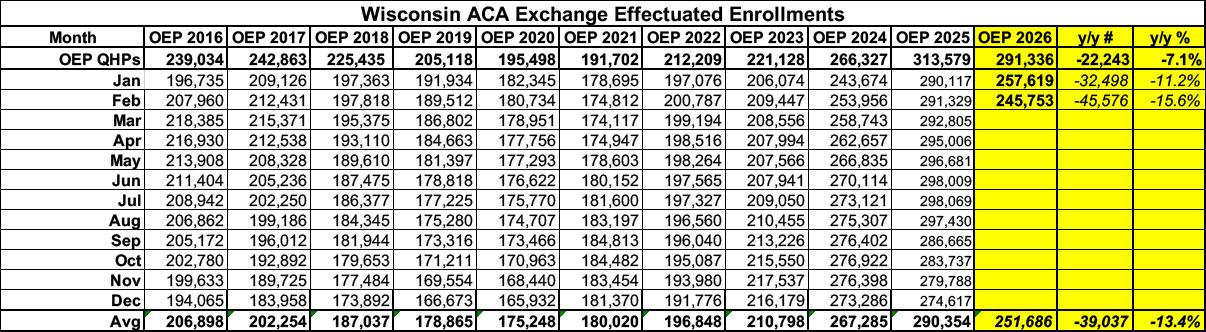
ACA exchange enrollment has dropped by over 15% in Wisconsin since Congressional Republicans allowed the enhanced federal subsidies to expire at the end of last year.
Initial signups during Open Enrollment were down 7% vs. OEP 2025...but effectuated enrollment was 11% lower year over year in January, rising to 15.6% lower as of February.
That's over 45,000 Wisconsinites who already lost coverage in just the first two months of the year...a number which has likely continued to climb since then.
Here's what this looks like visually, with both 2025 and 2019 (the last pre-COVID year, which didn't include the enhanced subsidies) included for comparison:
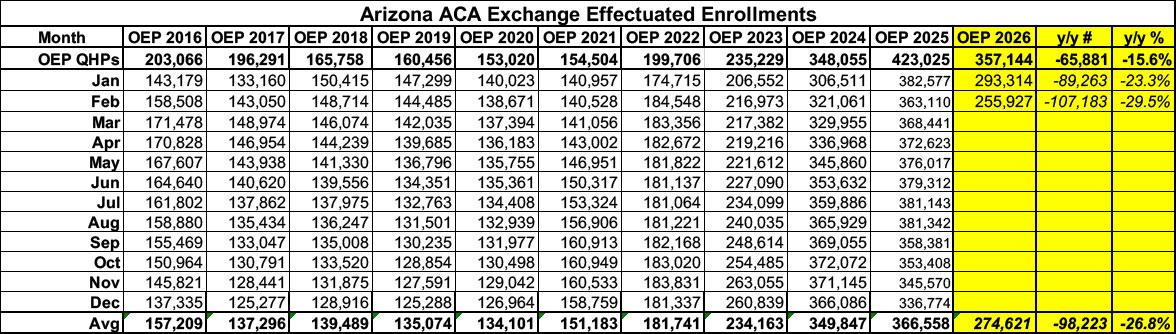
ACA exchange enrollment has dropped by nearly 30% in Arizona since Congressional Republicans allowed the enhanced federal subsidies to expire at the end of last year.
Initial signups during Open Enrollment were already down 15.6% vs. OEP 2025...and effectuated enrollment was 23% lower year over year in January, rising to nearly 30% by February.
That's over 107,000 Arizonans who already lost coverage in just the first two months of the year...a number which has likely continued to climb since then.
Here's what this looks like visually, with both 2025 and 2019 (the last pre-COVID year, which didn't include the enhanced subsidies) included for comparison:
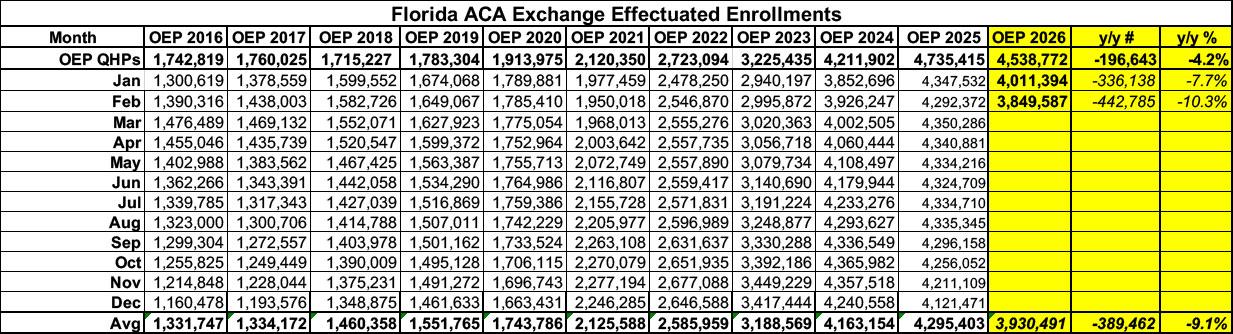
ACA exchange enrollment has dropped by more than 10% in Florida since Congressional Republicans allowed the enhanced federal subsidies to expire at the end of last year.
Initial signups during Open Enrollment were only down 4% vs. OEP 2025...but effectuated enrollment was 7.7% lower year over year in January, rising to 10.3% lower as of February.
That's over 440,000 Floridians who already lost healthcare coverage in just the first two months of the year...a number which has likely continued to climb since then.
...I could eliminate (or at least vastly narrow) the upper/lower bound estimates if CMS would actually update the actual Health Insurance Exchanges Monthly Effectuated Enrollment database, which is supposed to be updated monthly but which has been stuck at February 2026 for the past four months...
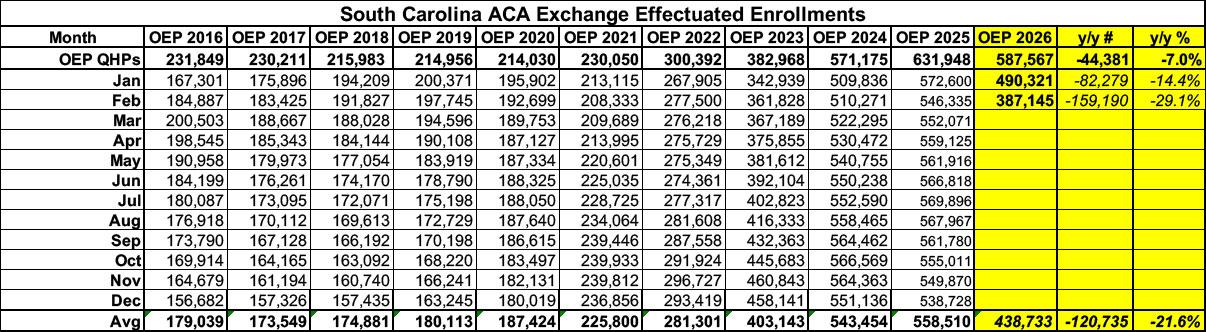
ACA exchange enrollment has dropped by nearly 30% in South Carolina since Congressional Republicans allowed the enhanced federal subsidies to expire at the end of last year.
Initial signups during Open Enrollment were only down 7% vs. OEP 2025...but effectuated enrollment plummeted by 14% in January and a whopping 29.1% as of February vs. a year earlier.
That's nearly 160,000 South Carolina residents who lost coverage in just the first two months of the year...a number which has likely continued to climb since then.
The chart below contains proposed rates for Plan Year 2027, which will be reviewed for compliance with federal and state requirements. Please submit any comments to DOI.HealthRateReview@illinois.gov by Friday, July 10, 2026.
Initial signups during Open Enrollment were only down 0.8% vs. OEP 2025...but effectuated enrollment was 4.4% lower year over year in January, gradually rising to 11.4% lower as of April, according to Get Covered NJ, the state ACA exchange.
That's over 56,000 Kansans who already lost coverage in just the first four months of the year...a number which has likely continued to climb since then.
ACA exchange enrollment has dropped by 32% in Ohio since Congressional Republicans allowed the enhanced federal subsidies to expire at the end of last year.
Initial signups during Open Enrollment were down nearly 20% vs. OEP 2025...but effectuated enrollment dropped further, by 23% year over year in January and by over 32% in February.
That's over 160,000 Ohioans who already lost coverage in just the first two months of the year...a number which has likely continued to climb since then.
ACA exchangeenrollment has dropped by 7.8% in North Dakota since Congressional Republicans allowed the enhanced federal subsidies to expire at the end of 2025.
Initial signups during Open Enrollment were down 4.4% vs. OEP 2025...but effectuated enrollment was 5.7% lower year over year in January and down 7.8% as of February.
Here's what this looks like visually, with both 2025 and 2019 (the last pre-COVID year, which didn't include the enhanced subsidies) included for comparison: